
by Pluribus Digital
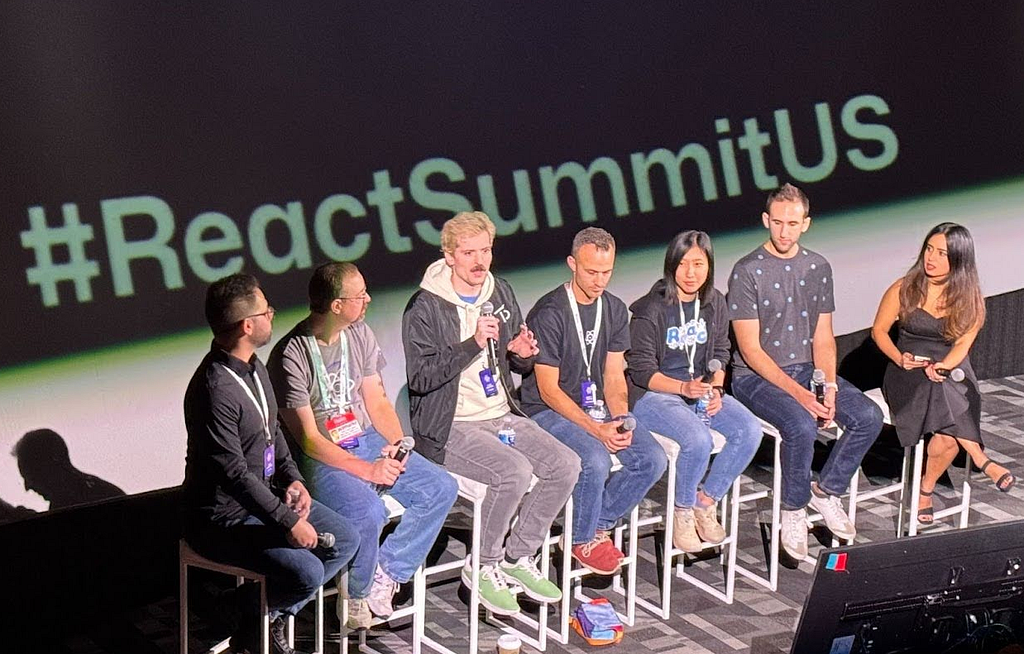
At Pluribus Digital, we believe that continuous learning and professional growth are critical to both individual success and the broader success of the organization, especially in the dynamic and evolving field of government contracting. As we expand and diversify, upskilling remains a top priority to ensure that our employees have the expertise and agility needed to meet the demands of an ever-changing landscape. This year, a number of our team members attended renowned technical conferences such as RenderATL, Ruby for Good, and the NationJS + React Summit. These events provided valuable insights into the latest industry trends, tools, and best practices. In this blog post, we’ll highlight a few of their experiences and how these opportunities have empowered our employees to sharpen their skills, stay ahead of the curve, and contribute even more effectively to our growing success.
You will hear from:
- Ksenia Coulter, Lead Software Engineer
- Jessica Dembe, Software Engineer
- Howard Miller, Sr. Software Engineer
- Eric Tillberg, Sr. Software Engineer
What conference did you attend and why did you choose to attend that conference?
Ksenia: I attended NationJS/React Summit combined conference event. I chose those events because they’re directly relevant to my area of expertise — Javascript. Those events also had workshop options and I was excited to get some hands-on practice with the latest React features.
Jessica: In June, I attended RenderATL. This three-day conference featured over 60 talks focused on leadership, culture and management, software engineering, accessibility, innovation, and design. I was particularly interested in this conference for several reasons: the talks not only explored how software developers are leveraging new and existing technologies but also provided valuable lessons I could apply to become a more skilled and confident software engineer.
Howard: I attended Ruby for Good this year. This is a conference I’ve been to before and is where I’ve met several people who work for Pluribus. Ruby for Good is a big part of why I now work for Pluribus, too. It’s also a conference very much in line with the Pluribus Digital mission. Ruby for Good is a conference focused on civic-minded projects, and where Pluribus focuses on government, Ruby for Good focuses on charitable and non-profit organizations.
Eric: Blue Ridge Ruby in Asheville, NC. I chose this conference because I’ve found regional conferences to be the most rewarding. It was only in its second year (and I had also attended the first year) so it was a nice chance to attend a professionally-run conference that was still figuring out its vibe.
What was your biggest takeaway from the conference?
Ksenia: The conference highlighted continued developments in front end ecosystems and how React is driving them. React introduced a new paradigm of how to write UI in a componentized way that made it easier for Front End developers to do their jobs. Now, the newest developments in React are trying to tackle the current hardest problems in web development — connection to the server and the database. Latest react works with server components, simplifying back end — front end connection and continuing to improve performance.
My other takeaway from talking to attendees is that not much has shifted in the industry when it comes to inclusion and awareness of technology’s negative effects on society. I heard multiple people say accessibility is boring. Most seemed generally excited for AI/LLM advancements without being aware of serious biases present in training data and how it taints these models.
Jessica: I had two key takeaways from this conference — one related to software engineering and another that encouraged me to reflect on how I can improve as both a developer and a leader.
Regarding software development, I attended talks from speakers who shared their experiences building evergreen projects and scaling them successfully. Even though my team is not currently working on a new product, their lessons gave me a fresh perspective on writing scalable, maintainable code for our current team and for future developers who may join. Additionally, I learned about updates and innovations in React v19. That particular talk enhanced my understanding of how to iterate on React projects while also providing ideas for improving the solutions I build for our customers.
On the topic of leadership and career development, a few talks inspired me to think about ways to grow as an individual contributor and develop leadership skills within my current team. Even in my day-to-day work, I can leverage my existing and evolving skills to become a trusted and dependable leader who helps deliver great products to our customers.
Howard: I felt a lot of confirmation at this year’s conference that I have succeeded a fair amount on my career goals, on the skills I’ve been working on the past few years, and I’ve been able to share what I’ve learned with others. And with all that, there’s still so much I can learn from the community, too.
Eric: The biggest highlight for me was getting the chance to bounce ideas off other people. I gave a lightning talk there, which was a very last-minute decision, and it generated lots of good conversation and reactions from other attendees.
For others that are contemplating attending a conference, what would be your advice to them to maximize their experience?
Ksenia: Conferences are good for introducing you to new technologies and APIs but not teaching them. Often, the best case scenario is you walk away with 15 new things to look up and learn.
It’s hard to learn much from a short talk, so any pre-work you do will help you absorb more information. The speakers and their ability to communicate really matters, so I recommend researching the speakers and seeing some of their past talks to decide which talks to attend. If you take notes, write up a short summary at the end of the conference day, because your notes will not make sense to you days after the conference.
Jessica: For developers considering conferences in 2025, my advice is to research what previous conferences looked like to understand what the next conference could look like. I also recommend setting clear learning goals and evaluating whether a conference aligns with them. This approach helped me make the most of my time at RenderATL, and as a result, I’ve grown into a more skilled and confident developer.
Howard: To maximize what you get out of a conference, don’t hesitate to ask others about it. I like talking to people at local meetups and the like about their conference experiences. What’s important about local meetups is that they are informal and low-commitment chances to find out more about your interests.
Many conferences have resources for people who are new or uncertain about upcoming events, like a special email contact or a Slack channel. Take advantage of these spaces to ask questions! Conference communities get stale without new people and new conversations, so good organizers will be happy that you’ve shown up and asked questions.
Eric: Talk to people! Listening to talks is ok but approaching a speaker with some synthesis of how their talk interacted with what you’re currently working on is both very satisfying and materially beneficial to your ability to remember and internalize the talk.
How did the conference enhance your career / learning this year?
Ksenia: Conferences are really great at getting you excited about your work. It’s a place to meet people who are either working on very similar problems or completely different problems than you. Both can bring new light into your current problem space.
Having gone to Nation JS and React Summit, I feel newly excited to learn the latest APIs and React updates. It also helped me understand where the Javascript ecosystem is going and why we’re not just “reinventing PHP” as an industry.
Howard: I found attending Ruby for Good helped me focus on what I want to do next in my work. I was able to take some of the technical details I learned and share it pretty immediately at my job with Pluribus, which felt great. Some of what I learned was about longer-term, strategic planning, and I discovered I’m very eager to sharpen my skills in that regard.
Eric: It was a nice confidence boost and made me feel more deeply embedded in a community of technologists.